
- Log in to post comments
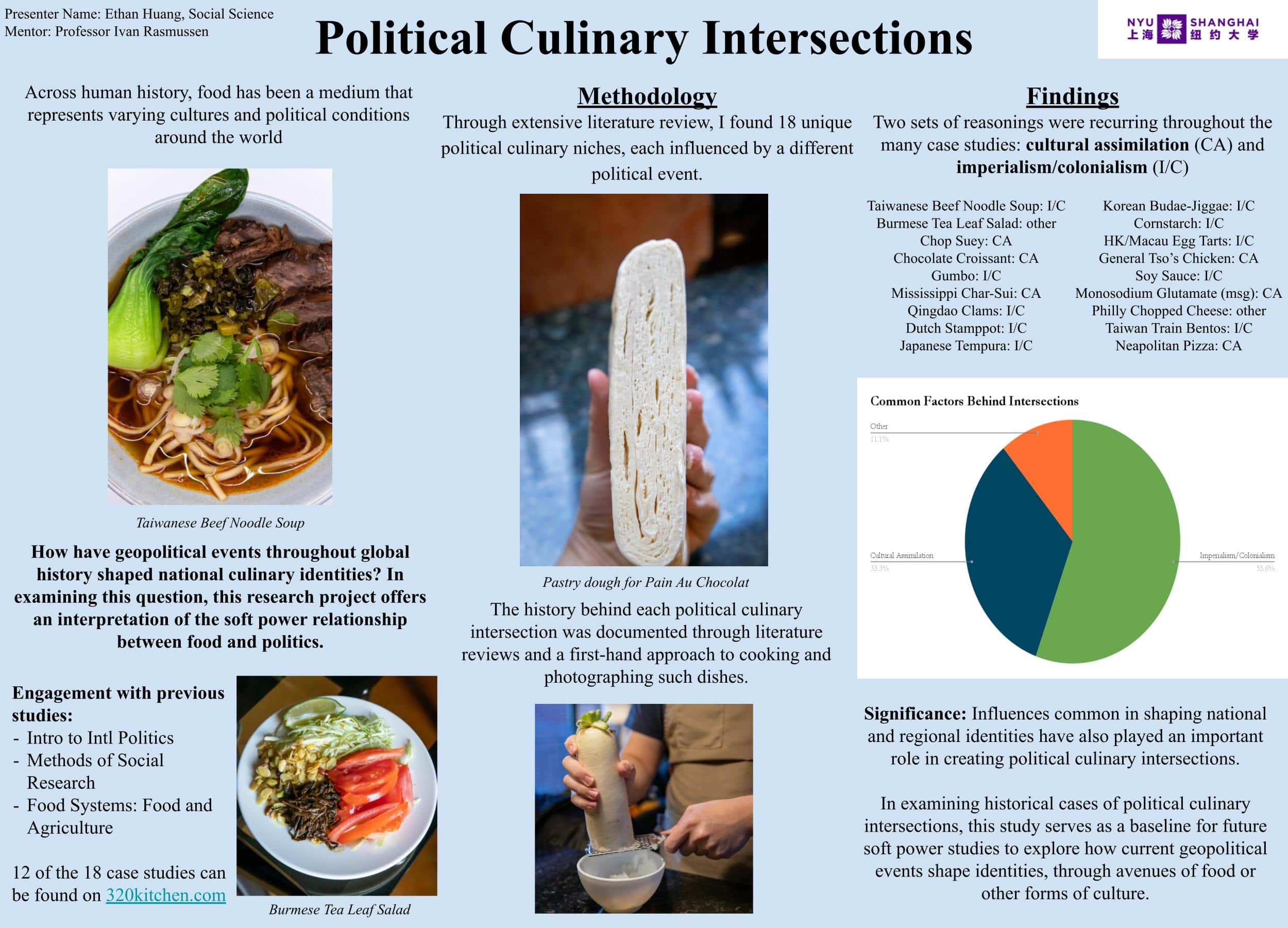
This project explores the question of how geopolitical and socio-cultural forces affect political culinary matters throughout global history. Through the avenues of research, cooking and documenting, this project aims to study and share the stories of unique dishes, representing a greater socio-cultural topic in international history. The end goal of this research is to discover if there are any common historical trends that have shaped the evolution of regional cuisines around the world.
Comments
- Log in to post comments
Hello! Thank you sharing your experiences with food intersectionality and the feedback! I admit that it was hard to capture depth of analysis in a poster format. While my articles on 320kitchen.com do have deeper level of analysis, depth of analysis and operationalization of definitions are this project's weaknesses. For me, this project served more as a study to introduce this intersection and capture the breadth of food diplomacy around the world. This study has actually been, in many ways, a stepping stone for my capstone thesis where I examined how countries actively used food as a vehicle for soft power. Again, thank you for the comments!
- Log in to post comments
This is a really interesting study. When I lived in Macao, I traveled along the maritime silk road to Goa to locate the "curry" that is unique to Macao, but actually found origins in Goa where the Portuguese colonial government was located, and Malacca, where the Portuguese (and others) had colonies and traded spices. What is missing for me is the depth of analysis and how cultural assimilation or imperialism was measured/operationalised. Keep working on this topic! Food surely tells stories and it’s where culture and history meets.
- Log in to post comments
It is an intriguing project. I have one question: It seems that there is some overlap between AC and I/C. Is there any food that reflects the two processes?
- Log in to post comments

This is a really interesting study. When I lived in Macao, I traveled along the maritime silk road to Goa to locate the "curry" that is unique to Macao, but actually found origins in Goa where the Portuguese colonial government was located, and Malacca, where the Portuguese (and others) had colonies and traded spices. What is missing for me is the depth of analysis and how cultural assimilation or imperialism was measured/operationalised. Keep working on this topic! Food surely tells stories and it’s where culture and history meets.